


Manager vs. IC: It's Not Just About Direct Reports
Learn how accountability, hiring influence, performance ownership, and organizational impact shape leveling decisions.Leveling debates almost always circle back to one question: Does this person have direct reports?
That's a fair starting point, since direct reports are a primary signal of a management level role. But it's only one input, and just as telling are the role's accountability, its scope and impact on the organization, and the kind of interactions it involves. Is this person updating executives, or advising them?
Starts with direct reports, then accountability confirms the level
Having direct reports puts someone on the management track as a baseline. The next question is how much of the management work they actually own: Are they fully accountable for their direct reports' performance?
Someone coordinating two contractors looks very different from someone who owns performance reviews, advocates for pay increases, and determines how the team is built to meet business needs. Both can look identical on an org chart, but they shouldn't in leveling.
To separate real management from coordination, look for four things:
- People development. Ongoing career conversations, not just providing input for performance reviews.
- Performance accountability. They own the hard conversations. Corrective action and making calls about fit aren’t handed to the People team or another leader to handle.
- Hiring influence. They shape the role and weigh in on the final decision, not just sit on an interview panel.
- Compensation input. They advocate in comp reviews and make concrete pay recommendations instead of rubber stamping what comes from above.
A clear example: M3 vs. IC4
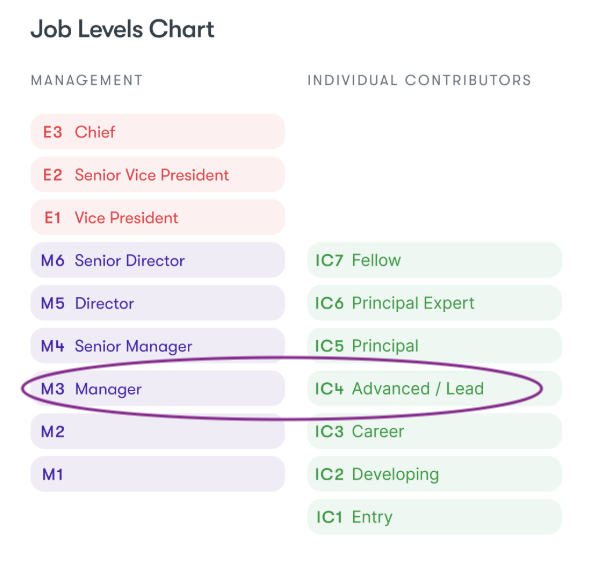
In a market-friendly leveling map like Kamsa's, the M3 Manager and IC4 Advanced levels are meant to be comparable in scope and impact. An IC4 can own a critical functional area and carry as much weight in their domain as an M3 carries across a team.
The main difference is accountability for team members. The M3 owns three things the IC4 does not:
- Hiring decisions for the team, not just input on candidates
- Performance reviews and ratings that affect pay and trajectory
- Firing, or owning the termination process when someone isn't working out.
If you're deciding between M3 and IC4, ask whether the role carries all three types of accountability above.
Navigating the grey areas
The tech lead. This “lead” role is common, especially in engineering. It often requires deep expertise in their specialized area, but without full ownership of performance or hiring, it stays a senior IC role. It moves to the management track only when management duties are required for the job, beyond mentoring, coordinating tasks, or project management.
Manager in title only. They've got ‘Manager” in their title, but they're not accountable for any employees’ performance, compensation, or hiring decisions. Think Marketing Manager, Product Manager, or Project Manager: The "manager" there means they run a functional area, not people, so it sits on the IC track.
How to settle a leveling debate
- Do they have direct reports? If yes, start on the management track.
- Are the four dimensions present? If several are missing, name the role as underdeveloped instead of working around it.
- The litmus test: If this role disappeared tomorrow, would you lose a deliverable or a team's capacity? A deliverable points to an IC level. A team's capacity points to a management level.
Direct reports get you into the category. What someone does with those direct reports determines the level.


