


How Compensation Leaders Can Get Executive Buy-In Faster
Getting buy-in for compensation initiatives isn't just about the data - it's about knowing how to communicate it to each type of leader.My first meeting with the CEO as a Director of Compensation. I walked out thinking, "Okay, I think that went well"...
My boss pulled me aside. The CEO had sent feedback: "Next time, context first, please."
I had spent 42 minutes walking him through methodology, market positioning, and data - and he spent most of it wondering why any of it mattered.
After sitting through hundreds of executive meetings, I learned this: knowing the data and having a polished deck isn't enough. It's useless if you can't read the room.
Executives have different communication styles. If you don't clock them early, you miss the chance to connect...and you might even lose trust.
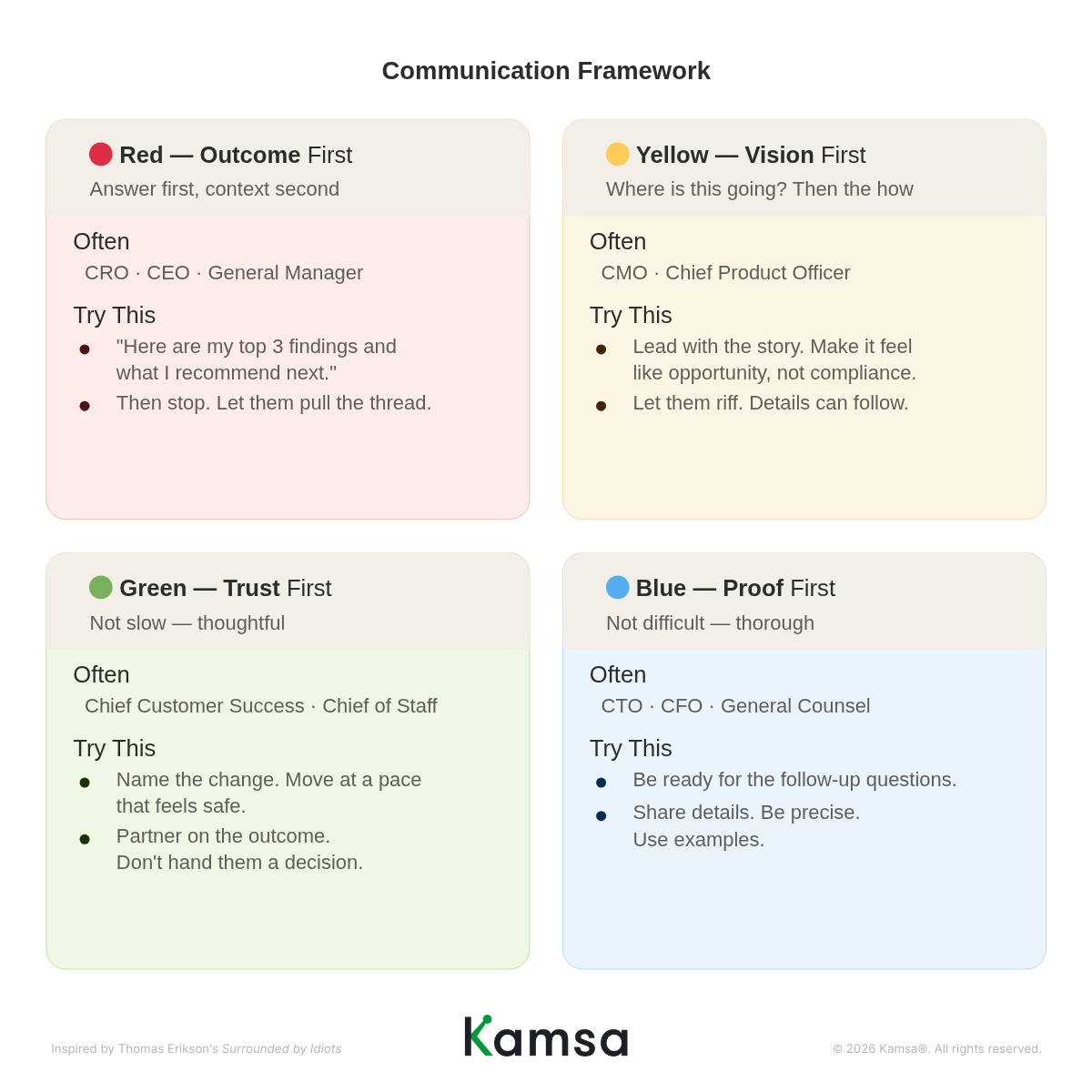
Most leaders default to one style - especially under pressure. This four-color framework helps you spot it, roll out comp initiatives smoothly, and get buy-in faster.
🔴 Red: Outcome First
They want the answer before the explanation. They want to know the "what" and the "now what" before the "why." Often your CRO or CEO.
If you lead with methodology, you've already lost them. They might nod politely, then interrupt or get frustrated waiting to get to the point.
Try this: "I've reviewed the data. Here are my top 3 findings and what I recommend next." Then pause.
🟡 Yellow: Vision First
Some leaders want to see where this is going before they hear how it works. Often found in marketing or product roles.
Comp initiatives land better when they feel like an opportunity - not a compliance exercise. Lead with the story. Let them get excited. Let them riff. The details can follow.
🟢 Green: Trust First
Some leaders are deeply attuned to their people and cautious about disruption. They move carefully because they care. Often in customer success or Chief of Staff roles.
Push too fast and they'll shut down.
Try this: Name the human impact. Move at a pace that feels safe. Make it clear you're there to partner on the outcome - not hand them a decision.
🔵 Blue: Proof First
Some leaders want to see the work before they move. They're not being difficult - they're being thorough. Often in finance or legal.
Expect questions on methodology, alternatives, and how pay bands were built.
Try this: Be ready for follow-up questions. Keep details in your back pocket. Be precise and use examples.
One more thing to keep in mind:
Communication styles shift. The CRO who's usually Red might show up Green when the conversation turns to their sales reps' commission plan.
This isn't about changing who you are. It's about expanding how you communicate - and adjusting your delivery based on the room.
You've done the hard work. Now stop letting your communication style sabotage it. The data doesn't get buy-in. Your adaptability does.
Lola Han is the Founder & CEO of Kamsa, an AI-powered compensation platform that helps companies build simple compensation programs and make better pay decisions, faster. She writes about compensation strategy and helping people leaders make confident pay decisions.


