


How to Budget for Salary Increases in 5 Steps
Learn how to budget for salary increases using performance data, compa-ratios, and clear guidelines to create fair, competitive merit increase programs.How to Budget for Salary Increases in 5 Steps
It could easily be argued that organizations are facing more new norms than ever. HR, people managers, and leaders need effective levers to pull in order to retain and engage top talent. One such lever is the merit increase.
A merit increase program is an essential compensation review component that should be evaluated yearly. However, it is commonly confused with pay raises that are not tied to performance. In this article, we'll unpack the importance of performance-based increases and how to establish a budget for them.
First, let’s talk about the different types of pay increases.
Promotion increases are mainly given when an employee’s job title changes and they take on more responsibilities. In the United States, the typical promotion increase is 10%, but this percentage can vary by country. For example, the promotion increase percentage for India is typically about 20%. A base salary increase isn't required when an employee receives a promotion, as the company could also leverage other compensation components like equity. However, employees getting promoted may be disappointed if they don’t receive a salary increase, especially if they are taking on a larger or more complex scope of work.
A market adjustment is when an employee is being paid below market and is given a raise to be more competitively aligned with the company's established compensation philosophy and compensation range for the employee's job, job level, and location.
Cost of Living Adjustment (COLA) is a historical practice used to and is used to offset inflation in a specific location. It may also apply when an employee moves to an area with a different cost of living. Reducing salaries when someone moves to a lower cost area is highly discouraged because it often leads to losing talent.
Merit increases are directly tied to the employee's performance during a certain time period.
Steps to Create a Salary Increase Budget
- Establish Job Leveling and Complete Performance Reviews
Before setting any numbers, start by ensuring job levels are accurate for all employees across the organization. Then, every manager should complete performance reviews for their employees. This first step gives you the structure and performance insight needed to create fair, data-informed pay decisions - Calculate Compa-Ratios to Understand Market Position
Evaluate where employees sit relative to market pay. Do this by calculating their compa-ratio by dividing their base salary by the market midpoint of their pay band. A compa-ratio of 100% means they’re right at market; 85% and 115% compa-ratio is typically considered a competitive range - Build Salary Increase Guidelines
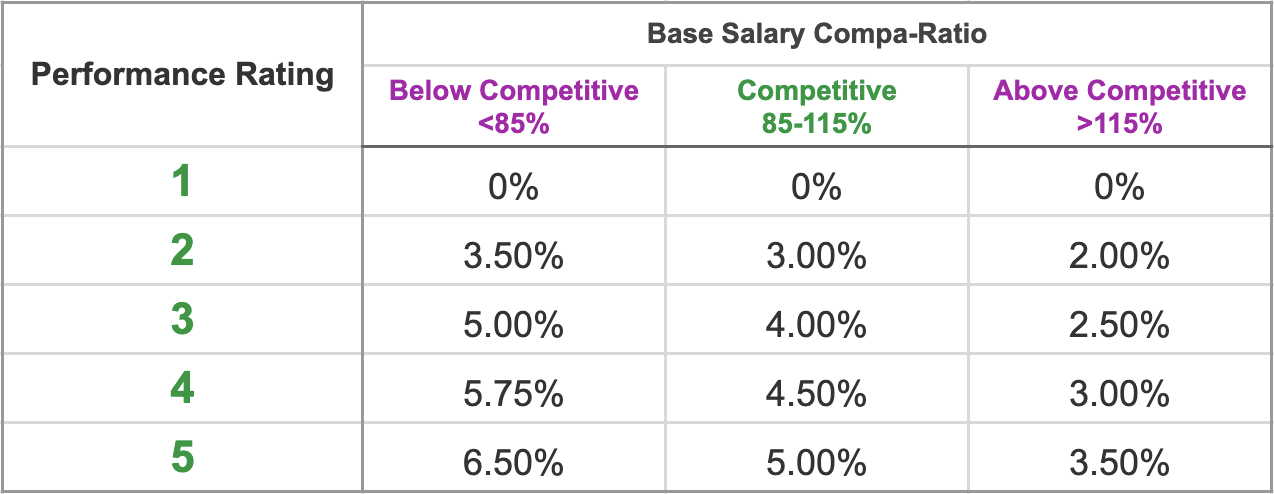
Create a matrix that outlines merit increase percentages based both on performance ratings and compa-ratios. This step ensures consistency across teams and countries
Example:
- Estimate the Salary Increase Budget
Apply your matrix to the current workforce to estimate the total salary increase budget. If performance ratings aren’t finalized yet, estimate based on historical distribution. Don’t forget to include an additional budget for promotions (e.g., 1% of payroll (at minimum)), and also consider adding an additional buffer to cover outliers or unforeseen adjustments. - Calibrate with Managers and Prepare for Communication
Once the guidelines and budgets are determined, the HR/People team can collaborate with managers in a compensation review process, where the managers propose base salary increases for their employees, factoring in various data points (i.e., performance, compa-ratio, tenure, budget). Involving the managers is crucial in this pay decision process so they can communicate compensation decisions confidently to employees.
About Kamsa
Kamsa's consultative approach, combined with our proprietary market compensation data, allows companies to budget and forecast salary increase budget and establish compensation strategies, painlessly. Features like our compensation review tool automate routine compensation processes.


