


The CLEAR Framework for Hard Compensation Conversations
Learn how to handle difficult compensation conversations — align leaders, build trust, and move from emotional reactions to data-driven clarity.I had just stepped in as a new Compensation Director - still figuring out the org - when my boss asked for a "quick" presentation to leadership on our compensation philosophy.
Halfway through my preso, a VP of one of our largest teams cuts in: "Wait a minute. You're targeting market median? Are you saying we're mediocre?"
The room went quiet. Then, a leader from Finance jumped in - "Yeah…wait. I'd like to understand that too."
I'm not gonna lie - I felt thrown to the wolves. I wanted to slip out the back. I never forgot that room. And after 15+ years in comp across companies of all sizes and industries - that type of reaction never really goes away.
Most tough comp conversations aren't really about pay. They're about fear - a manager worried they'll lose someone they can't afford to lose, or bracing to explain a decision they don't fully understand themselves.
I've seen strong comp partners get worn down - not by the work, but by the constant emotional weight. So I built a framework to shift the conversation from reaction to clarity. I call it CLEAR.
Note: These steps don't always happen in order - read the room.
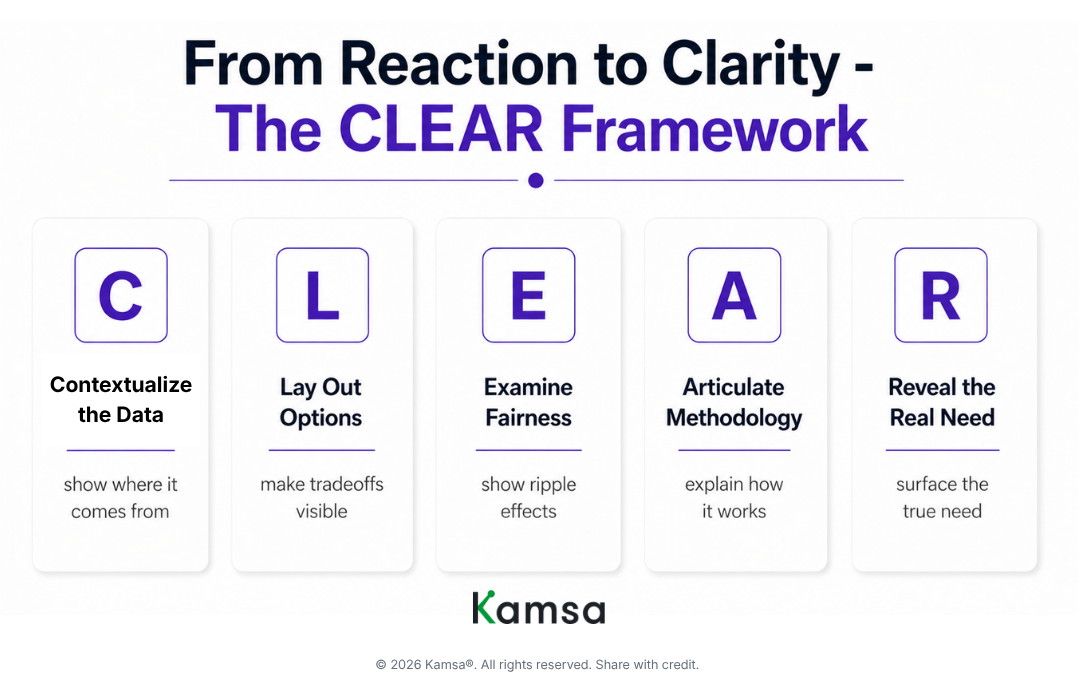
𝗖 - 𝗖𝗼𝗻𝘁𝗲𝘅𝘁𝘂𝗮𝗹𝗶𝘇𝗲 𝘁𝗵𝗲 𝗠𝗮𝗿𝗸𝗲𝘁 𝗗𝗮𝘁𝗮
Most pushback comes down to one thing - “can I trust this?” Walk them through the data source, company set, talent pool, and how roles were matched. You don’t need a data dump, just show your work.
𝗟 - 𝗟𝗮𝘆 𝗢𝘂𝘁 𝘁𝗵𝗲 𝗢𝗽𝘁𝗶𝗼𝗻𝘀
People push back when it feels like a fixed decision. Show the tradeoffs. What happens if you target 65th percentile? Cost, who falls out of range? Now, it’s grounded in the business - not emotion.
𝗘 - 𝗘𝘅𝗮𝗺𝗶𝗻𝗲 𝗙𝗮𝗶𝗿𝗻𝗲𝘀𝘀
Share the ripple effects out loud. “If we raise new hire pay, here’s what it does to current employees in the same role.” Because when people see the ripple effects, fairness kind of explains itself.
𝗔 - 𝗔𝗿𝘁𝗶𝗰𝘂𝗹𝗮𝘁𝗲 𝘁𝗵𝗲 𝗠𝗲𝘁𝗵𝗼𝗱𝗼𝗹𝗼𝗴𝘆
Walk them through how roles were leveled, priced, and why certain survey cuts or percentile targets were used for harder-to-fill roles. You're not defending a number. You're showing there's a system behind it.
𝗥 - 𝗥𝗲𝘃𝗲𝗮𝗹 𝘁𝗵𝗲 𝗥𝗲𝗮𝗹 𝗡𝗲𝗲𝗱
“We need to pay more” is usually a symptom. Ask why. Offers being declined? Higher attrition than before? Work together to name the real issue - then, solve for that. Maybe you don’t move to 75th percentile across the board. But you do for certain job families, where it matters most.
After that meeting, I sat down with that VP and Finance. We walked through the pay ranges, the data, and one key point: median isn't a ceiling. There's a full range - and managers have flexibility within it based on factors like performance and experience. We mapped a phased approach - higher targets for harder to find skillset roles, and a plan to bring anyone below range up over time. By the end, they got it.
Give leaders the clarity to navigate tough pay conversations - and the confidence to stand behind their decisions.
Lola Han is the Founder & CEO of Kamsa, an AI-powered compensation platform that helps companies build simple compensation programs and make better pay decisions, faster. She writes about compensation strategy and helping people leaders make confident pay decisions.


